I write this guide to help IT pros and data center managers choose the best ECC solutions for modern systems. In 1970, the Intel 1103 changed how we store data, and later SDRAM milestones like Samsung’s 1992 KM48SL2000 set the stage for today’s high-speed modules.
Adding extra memory is one of the simplest, most cost-effective upgrades. Most servers and desktops ship with minimal capacity, so a targeted kit can boost performance and uptime quickly.
Always check price and model compatibility before you buy. The right DDR5 kit, rated MHz, or SODIMM form factor keeps a server stable and avoids costly downtime.
I cover options from basic desktop memory to advanced ECC modules and RGB gaming products like Vengeance RGB so you can find the right balance of reliability, speed, and price for your environment.
Key Takeaways
- I recommend verifying model compatibility to prevent system issues.
- Compare price per gigabyte to find the best value for your budget.
- DDR5 and MHz ratings matter for performance-critical workloads.
- ECC modules protect critical data and improve server uptime.
- Choose the correct form factor—desktop, laptop, or SODIMM—for easy upgrades.
Understanding the Role of ECC Memory in Enterprise Servers
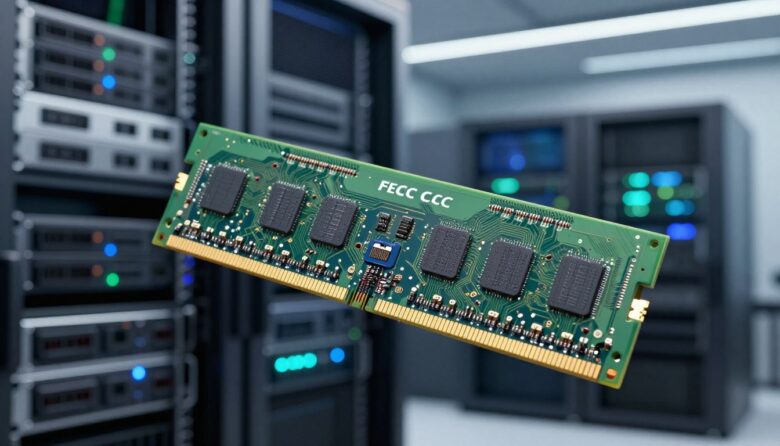
In enterprise servers, error-correcting modules act as a quiet watchdog that keeps critical workloads accurate.
The core job is simple: detect faults and fix small bit errors before they corrupt data. Parity parts only flag problems and halt the machine. ECC continues running and repairs many transient faults automatically.
The Importance of Error Correction
ECC protects uptime for databases and large spreadsheets that crunch lots of data. The technology traces back to early DRAM advances—Robert Dennard’s 1967 single-transistor idea and the Intel 1103 in 1970 set the stage for today’s sdram designs.
Preventing Data Corruption
I believe understanding parity versus ECC is vital for any IT pro. ECC adds a layer of security that standard desktop memory lacks. When you compare price and reliability, the investment often pays off for systems that cannot tolerate downtime.
“ECC detects and corrects random faults, keeping servers stable under heavy load.”
- ECC traps errors that would otherwise crash a computer.
- Choose the right model and form factor for each server.
- Even with rgb or performance modules, enterprise-grade correction matters most.
Key Technical Specifications for Your Memory Ram Upgrade
A focused checklist of technical specs will save you time and prevent costly compatibility mistakes. Start by checking your system documentation to confirm supported bus speeds, module type, and maximum capacities for each slot.
Capacity and form factor matter. Older DDR3 chips ranged from 512 MB to 8 GB per chip, allowing modules up to 16 GB. Verify whether your server needs DIMM or SODIMM so the new kit fits the chassis.
The speed of SDRAM is measured in MHz. Mixing speeds like PC100 and PC133 can cause instability. Common legacy bus rates include DDR2-400, 533, 667, 800, and 1066, so match the model to the supported frequency.
Tweaks for performance: Intel XMP and AMD EXPO profiles let you push timings beyond JEDEC defaults. I recommend verifying motherboard support for XMP or EXPO before buying a high-MHz kit or a vengeance rgb option.
- Check documentation first to avoid mixing incompatible SDRAM types.
- Consider price versus MHz—higher speed often costs more.
- Choose desktop memory matched to your model for stability under load.
Comparing Modern Memory Module Architectures
Today’s module designs blend higher bandwidth, lower voltage, and compact form factors. I focus on what matters for performance, cost, and fit when you pick parts for servers or high-end desktop builds.
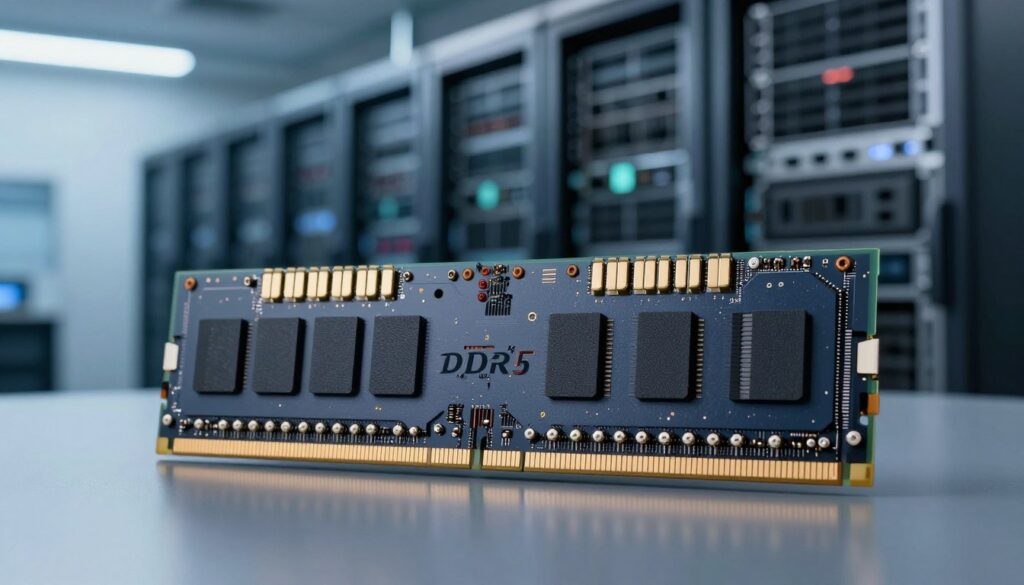
DDR5 Advancements
DDR5 brings higher bandwidth and better power efficiency than past generations. It doubles internal buffering and improves channel parallelism, so heavy workloads move data faster with less heat.
Understanding DIMM vs SODIMM
Standard DIMMs use 168 pins in legacy designs and offer full 64-bit channels. That removed the old need to install SIMMs in pairs on Pentium-era systems.
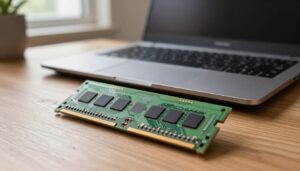
A SO-DIMM is roughly half the size of a standard desktop stick. I recommend SODIMM kits for compact servers or small form factor systems where space matters.
The Role of Frequency and MHz
Frequency, measured in MHz, governs transfer rates. Higher MHz generally improves throughput, but latency and model compatibility also shape real gains.
My advice: choose stable kits with proven MHz performance to avoid hidden instability. For gaming rigs or enterprise servers, the right balance of speed and price matters most.
| Architecture | Key Benefit | Best Use |
|---|---|---|
| DDR5 | Higher bandwidth, lower power | New servers, high-end desktop |
| DIMM (standard) | Full-size 64-bit channel | Server and desktop builds |
| SO-DIMM | Compact form factor | Laptops, compact servers |
| High‑MHz kits | Faster transfer rates | Gaming and data‑heavy tasks |
- I find DDR5 delivers the biggest efficiency gains for new systems.
- Check kit model compatibility and price before you buy.
- RGB modules like vengeance rgb often mark enthusiast-grade desktop memory lines.
Evaluating Performance and Reliability Requirements
I recommend balancing throughput and uptime when selecting parts for production systems.
DRAM stores bits with a transistor and capacitor pair, which keeps costs lower than SRAM and makes it the dominant choice for most kits.
The growing gap between CPU speed and external memory response—the memory wall—can limit real gains from higher MHz unless the rest of the system keeps pace.
Reliability comes first for mission-critical servers. ECC detection and correction reduce crashes and protect data during peak loads.
“Prioritize proven, pro-grade modules over the lowest price when uptime matters.”
Virtual memory lets the OS extend capacity via a paging file, but swapping hurts performance. Choose a kit that minimizes reliance on disk-backed pages.
| Factor | Why it matters | Action |
|---|---|---|
| Reliability | Prevents data corruption and downtime | Pick ECC or pro kits, verify model compatibility |
| Performance | Throughput vs latency affects workloads | Match DDR5 and MHz to system and enable Intel XMP / AMD EXPO |
| Price | Budget constraints vs long-term cost of outages | Avoid cheapest options for critical servers |
- Check desktop memory and laptop memory compatibility before purchase.
- I test kits in real workloads to confirm stability under load.
- Consider rgb or vengeance rgb only for non-critical desktop builds.
Compatibility Considerations for Server Hardware
Before you buy upgrades, confirm the exact hardware limits and supported module types for your server. I always start by reading the system manual and checking the vendor’s compatibility list.
Verifying System Documentation
System documentation holds the answers: supported densities, form factors, and maximum per-slot capacity. That step prevents mismatches that stop a computer from booting.
Mixing parity and non-parity parts is usually unsupported and can cause errors or failure to start. Match the module type to the model specified in your documentation.
- I recommend using official tools from vendors such as Micron Technology, Inc. (8000 S. Federal Way, Boise, Idaho 83707-0006) to scan and suggest compatible upgrades.
- Desktop memory and memory laptop form factors differ; note whether your system needs DIMM or SODIMM before purchase.
- Correct seating is essential—improper installation can make a new module invisible to the system.
“Spend a few minutes checking specs now to avoid a costly return or downtime later.”
Price for a certified memory module tends to be higher than generic options, but I view that as insurance for stability. For DDR5 and high-speed kits, verify model and price together so you get a stable upgrade that fits your server.
Budgeting for Enterprise Memory Solutions
You can stretch a server budget by prioritizing proven, pro-grade modules over flashy extras. I focus on cost, model compatibility, and long-term value when I plan upgrades.
Factor price against total cost of ownership. High-performance modules like DDR5 or older RDRAM (PC800 at 800 MHz) cost more up front. They often save money by reducing downtime and replacements.
Don’t mix speeds—RDRAM and SDRAM behave poorly when combined. Match MHz and module type to the system to avoid instability.
- I recommend setting a budget that accounts for ECC and certified desktop memory or laptop memory.
- Compare kits by model, manufacturer stability, and real-world benchmarks.
- Avoid overspending on RGB gimmicks like vengeance rgb unless you build a gaming desktop.
“Plan for future expansion and choose kits that support Intel XMP or AMD EXPO when higher MHz and profiles matter.”
Conclusion
, Let me summarize practical checks to ensure your next upgrade succeeds without surprises. I recommend you verify the exact model support in your server before buying. That small step prevents compatibility issues and saves time.
Choose quality over lowest price. Good computer memory and certified memory modules reduce downtime and extend hardware life. I focus on proven kits that match your model and workload.
For desktop builds, pick parts that fit the chassis and heat profile. Invest in one solid kit rather than mixing types. If you like aesthetics, consider RGB only after confirming stability.
Thanks for reading—good luck with your upgrades, and check the model list twice before you order.
FAQ
What are ECC modules and why do I need them for servers?
ECC modules are error-correcting modules designed to detect and fix single-bit errors automatically. I recommend them for enterprise servers and data center systems because they reduce silent data corruption and increase uptime compared with non‑ECC modules. For mission‑critical workloads—databases, virtualization, and analytics—ECC provides an added layer of data integrity and reliability.
How does error correction actually protect my data?
Error correction uses parity bits and onboard logic to identify and repair bit flips as they occur. I’ve seen setups where ECC prevented costly rollbacks by correcting transient faults from electrical noise or cosmic rays. That protection helps maintain consistent results and lowers the risk of file corruption or application crashes.
What technical specs should I prioritize when upgrading server memory?
Prioritize capacity, module type (RDIMM vs. LRDIMM), supported speeds (MHz), and whether your platform supports DDR5 or DDR4. I also check supported voltages and the maximum per‑channel capacity listed in the server manual. For virtualization or heavy caching, higher capacity and low latency yield the best performance-per-dollar.
What improvements does DDR5 bring to enterprise systems?
DDR5 offers greater bandwidth, higher density per module, and improved power management compared with previous generations. I find it benefits memory‑bound workloads by allowing larger in‑memory datasets and better throughput. Many new Intel and AMD server platforms now support DDR5 for those advantages.
When should I choose DIMM over SODIMM for a deployment?
Choose DIMM variants for rack and blade servers because they provide full‑height modules and higher capacities. SODIMM is for compact or edge servers and some high‑density appliances. I always verify form factor compatibility in the system documentation before buying.
How important is frequency (MHz) for server performance?
Frequency affects bandwidth; higher MHz improves throughput for memory‑heavy applications. But I don’t sacrifice capacity or compatibility just to chase raw MHz. For many enterprise workloads, balanced capacity and channel population deliver more real‑world gains than top speed alone.
How do I verify compatibility with my server hardware?
I consult the server vendor’s Qualified Vendor List (QVL) and the motherboard or system guide to confirm supported module types, speeds, and maximum capacity per slot. BIOS updates can also add support for newer modules, so I check firmware versions before installing.
Are RDIMM and LRDIMM interchangeable?
No. RDIMM (registered) and LRDIMM (load‑reduced) use different buffering techniques, and systems usually require one or the other. I always match the module family across all populated slots to avoid compatibility issues and stability problems.
What reliability metrics should I evaluate when choosing enterprise modules?
Look for ECC capability, vendor warranty, MTBF ratings, and thermal design. I also review testing certifications and whether the modules support Intel XMP or AMD EXPO profiles for validated performance settings on compatible platforms.
How should I budget for enterprise memory upgrades?
Factor in total capacity needs, the cost per gigabyte for RDIMM/LRDIMM or DDR5 kits, and potential downtime for installation. I recommend planning for future growth and buying in matched kits to ensure stability, which often provides better long‑term value than piecemeal purchases.
Can I mix different capacities or speeds in the same system?
Mixing capacities or speeds can work but often forces the system to run all modules at the lowest common speed and may reduce performance or stability. I avoid mixing module types and populate channels evenly to maintain optimal performance.
How do I test new modules after installation?
I run thorough validation with memtest utilities or vendor diagnostic tools under load for several hours, check ECC event logs, and monitor temperatures. If the system supports it, enabling hardware error reporting in BIOS helps catch issues early.
Which brands and product lines do I trust for enterprise deployments?
I favor established suppliers with enterprise support, solid warranties, and clear compatibility documentation. Brands like Crucial, Samsung, Kingston, and Corsair have proven enterprise lines for servers and workstations, and I rely on their QVL listings when selecting modules.
Is power consumption a major concern with higher‑density modules?
It can be, especially in dense racks. I compare wattage, voltage, and thermal specs and ensure adequate cooling. DDR5 modules often include on‑die power management, which can improve efficiency, but I still plan for proper airflow in data center racks.
What should I know about warranty and support for enterprise memory?
Look for lifetime or multi‑year warranties and clear RMA policies. I prefer vendors that offer technical support for compatibility questions and provide replacement options for failed modules to minimize downtime.

Marcus is a Senior Hardware Analyst with over 15 years of experience in system architecture and PC building. Specializing in memory optimization and overclocking, he translates complex RAM specifications into practical, easy-to-understand guides. When he isn’t bench-testing the latest DDR5 kits for AllTopSoft, Marcus is likely tinkering with his custom liquid-cooled home server.