Building a fast desktop for modern gaming means choosing the right memory kit. High-performance setups must handle complex video rendering and heavy multitasking without lag. That makes module choice crucial for both frame rates and stream stability.
Consider budget and speed together. For example, model KVR32S22S8/8 is priced at $118.99 while AA160D3SL/8G lists for $61.59. A top-tier option like WDS100T3X0G runs $379.99 and model 15306 is $60.45, so price matters when balancing capacity and frequency.
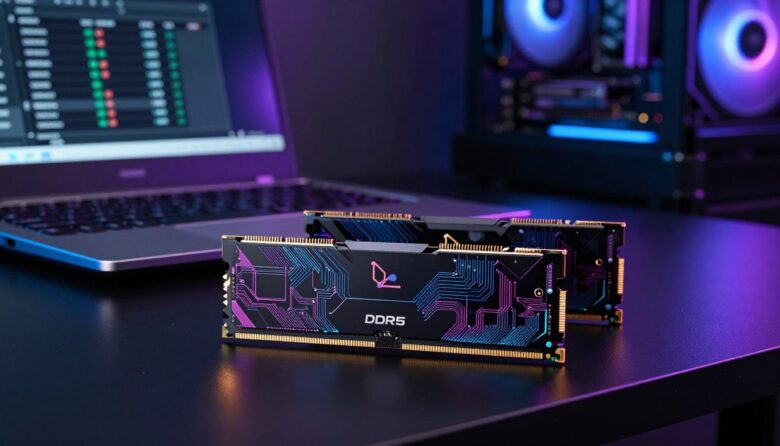
DDR5 kits bring wider bandwidth than older standards, and options such as ddr5 5600 or ddr5 6000 are becoming common in pro builds. Many gamers still use ddr4 3200 at 3200 mhz as a baseline, but new kits and vengeance rgb styling add both speed and flair.
Key Takeaways
- Select modules that match your motherboard pin layout and sdram requirements.
- Compare model prices and reviews to balance budget and performance.
- DDR5 kits at higher mhz offer better bandwidth for video and streaming tasks.
- An 8gb stick is entry level; gaming rigs usually need larger kits for smooth play.
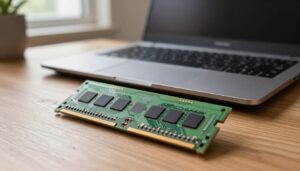
- Check sodimm memory compatibility for laptops and compact desktops.
Understanding the Role of Memory Ram in Modern Gaming
How quickly a game loads textures and reacts to input comes down to the bandwidth and latency of your system’s short-term storage.
The history of this component goes back to IBM’s 1965 SP95 SRAM and the Intel 1103 DRAM of 1970. Samsung later advanced SDRAM in 1992, which shaped modern designs.
For desktop and laptop builders, picking the right module affects frame pacing, load times, and streaming stability. Check the model fit and sodimm memory options for thin laptops. Comparing the price of a legacy ddr4 3200 stick against newer kits helps decide if an upgrade is worth it.
- Compatibility: Match sdram type and slot on your motherboard.
- Performance: Faster kits cut stutter in CPU-bound scenes.
- Form factor: sodimm modules suit laptops; full-size kits go in desktops.
| Generation | Typical Frequency | Use Case | Price Range |
|---|---|---|---|
| DDR4 (example) | ddr4 3200 / 3200 mhz | Budget gaming desktops | $40–$120 |
| DDR5 Entry | 4800–5600 MT/s | Midrange rigs, streaming | $120–$220 |
| DDR5 High-end | 6000+ MT/s | Competitive gaming, pro workstations | $220–$400+ |
Key Technical Specifications for DDR5 Modules
Understanding the core specs helps you pick a kit that fits your build and budget. Look beyond raw frequency and check sustained transfer rates, timing, and compatibility before you buy.
Understanding MT/s and Frequency
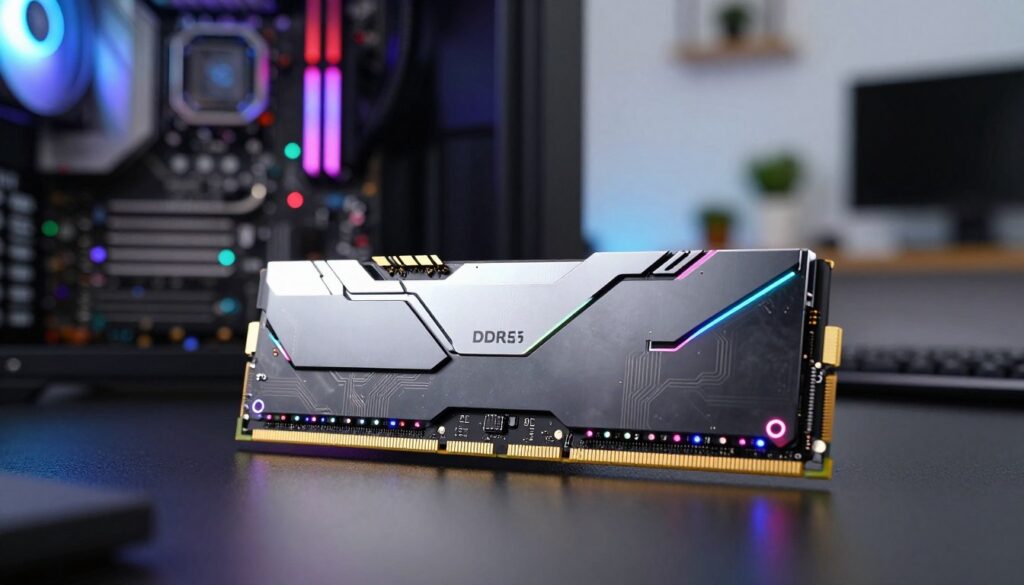
MT/s (mega transfers per second) measures how much data a module moves each second. Higher MT/s gives a clearer path for textures and assets during play.
Popular choices include ddr5 5600 and ddr5 6000, with 6000 mhz kits favored in pro setups for peak throughput. But higher speed often raises the price, so balance frequency with total capacity.
The Importance of Latency
Lower latency keeps frame pacing tight. A 3200 mhz ddr4 3200 stick may still beat some high-speed modules in real-world tests if timings are worse.
When comparing models, check reviews for effective latency and real-game benchmarks. Also confirm pin layout: udimm differs from sodimm memory used in laptops.
- Profiles: Many kits include intel xmp or amd expo to simplify tuning.
- Aesthetics: A vengeance rgb or rgb ddr5 kit adds cooling and style for a gaming computer.
- Buy smart: Match module specs to your motherboard pin and consider price per gig for capacity.
| Spec | Why it matters | Example |
|---|---|---|
| MT/s | Throughput for large assets | 5600–6000 |
| CAS / Latency | Frame pacing, responsiveness | Lower is better |
| Form factor | Slot compatibility | UDIMM vs SODIMM |
Comparing DDR5 Against Previous Generations
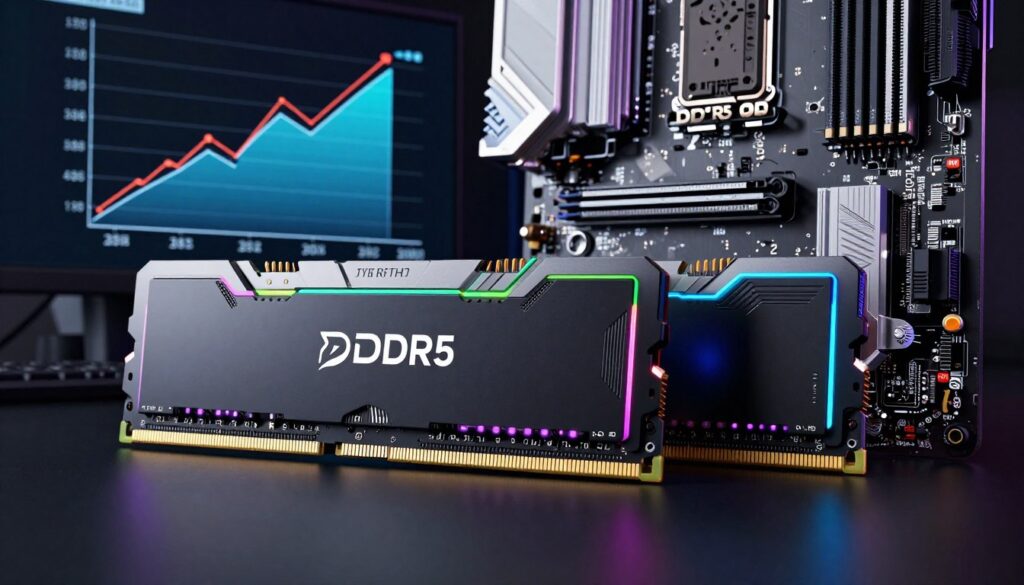
For gamers weighing upgrades, the jump from DDR4 3200 to DDR5 6000 is one of the clearest performance moves.
Across real-world tests, a 16gb ddr4 kit often lags behind a modern ddr5 6000 setup in bandwidth-heavy tasks. This matters for texture streaming and large asset loads in demanding titles.
Upgrading from an 8gb ddr4 stick to a ddr5 5600 kit usually gives a noticeable boost in frame pacing and multitasking. Reviews highlight smoother gameplay and faster load times in many desktop builds.
Price has stabilized for many ddr5 models, so buyers get improved efficiency and headroom without the premium seen at launch. Each new model also trims power draw, helping long-term desktop stability.
“The leap from 3200 mhz to ddr5 6000 represents a major jump in sdram that benefits both casual and pro gamers.”
- Compatibility: ddr5 is not backward compatible with ddr4 slots—check sodimm memory needs for laptops.
- Performance: Higher mhz and better timings yield clearer gains for modern gaming rigs.
- Price vs. value: Compare models and reviews to find the best kit for your budget.
| Factor | DDR4 3200 (example) | DDR5 5600–6000 |
|---|---|---|
| Typical use | Budget desktop gaming, 8–16GB kits | High-performance desktop and competitive rigs |
| Bandwidth / mhz | 3200 mhz baseline | 5600–6000+ mhz, higher throughput |
| Price | Lower historic price, varies by kit | Stabilized; competitive for new builds |
| Form factor | UDIMM & SODIMM legacy support | New UDIMM & SODIMM variants; not cross-compatible |
Balancing Capacity and Speed for Your Gaming Rig
Picking the right balance of capacity and speed determines how well a gaming build handles large maps and multitasking. Start by matching capacity to your play style, then pick speed that improves load times without breaking the bank.
Choosing the Right Capacity for Gaming
For most desktop players, a 16gb ddr4 or a dual-stick ddr5 kit gives smooth performance. An 8gb setup is now the minimum and may show limits in modern titles.
- Casual: 8–16GB for light gaming and streaming.
- Competitive / Pro: 16–32GB to avoid swapping and stutter.
- Laptop buyers: check sodimm or sodimm memory pin count for compatibility.
The Impact of 6000 MHz Kits
High-frequency modules such as ddr5 6000 deliver higher mt/s and lower frame spikes in bandwidth-heavy scenes. The 6000 mhz class often beats older kits like ddr4 3200 in texture streaming and CPU-bound tasks.
That said, price matters. Compare model reviews and real-world tests to see if a ddr5 6000 kit justifies the cost for your build.
Benefits of RGB Lighting
Adding vengeance rgb or an rgb ddr5 kit gives a pro look without sacrificing performance. Many modern kits pair attractive lighting with heatspreaders and stable timings.
| Use Case | Recommended | Why |
|---|---|---|
| Budget | 8GB / 16gb ddr4 | Lower price, decent for entry gaming |
| Balanced | DDR5 5600 / 16–32GB | Good throughput and value |
| High-end | DDR5 6000 / 32GB+ | Max mt/s and lower latency for pro play |
- Always check udimm vs sodimm and the motherboard pin layout before buying.
- Test each model to confirm stability; reviews help reveal real gains over 3200 mhz kits.
Compatibility Considerations for Intel and AMD Platforms
Motherboard firmware and BIOS settings determine whether a high-frequency kit reaches full clocks. Always confirm platform support before buying to avoid boot loops or reduced performance.
Understanding XMP and EXPO Profiles
Intel XMP and AMD EXPO profiles let a kit run at its rated mhz without manual tuning. Enable the correct profile in BIOS to hit ddr5 6000 or ddr5 5600 speeds on supported boards.
- Check the QVL list and model compatibility to reduce surprises during setup.
- When building a desktop, ensure vengeance rgb sticks fit the motherboard and won’t block coolers.
- Price often rises for kits that include validated XMP/EXPO profiles and tighter timings.
- Verify pin layout for older ddr4 3200 swaps and for sodimm memory used in compact systems.
- Read professional reviews to confirm real-world stability for your chosen kit.
| Platform | Profile | Common Concern |
|---|---|---|
| Intel | Intel XMP | QVL and BIOS support for overclock profiles |
| AMD | AMD EXPO | Chipset validation for ddr5 6000 kits |
| Compact / Laptop | SODIMM | Pin count and thermal clearance |
Optimizing Your System for Peak Memory Performance
Tuning clock rates and timings unlocks the full potential of a high-frequency kit in both desktop and laptop builds.
Enable the right profile first. Use Intel XMP or AMD EXPO to set rated mt/s and timings for a ddr5 6000 kit. This often delivers the best balance of speed and stability.
Keep drivers and BIOS up to date. Updated firmware can fix compatibility issues for a specific model and improve long-term stability.
- Voltage: For older ddr4 3200 sticks, set the correct voltage in BIOS to avoid errors.
- Seating: Every 288-pin UDIMM or SODIMM memory stick should be seated firmly to prevent faults under load.
- Balance: A ddr5 5600 kit can hit a sweet spot between price and performance for many users.
The higher price of a premium rgb ddr5 or vengeance rgb module can be worth it for heavy video work and pro gaming. Read reviews for your model; they often flag BIOS updates or quirks before you buy.
| Tweak | Why it matters | Quick action |
|---|---|---|
| Profile (XMP/EXPO) | Sets rated mt/s and timings | Enable in BIOS |
| Firmware & Drivers | Fixes compatibility and stability | Check motherboard site for updates |
| Voltage & Seating | Prevents errors at high mhz | Verify voltage and reseat sticks |
| Model Reviews | Reveal real-world behavior | Scan reviews before purchase |
Conclusion
Picking the right kit shapes your gaming experience. Choose modules that match your board, capacity needs, and budget to avoid bottlenecks.
Carefully compare technical specs and compatibility profiles to get peak results. Small tuning steps in BIOS often unlock real gains on a modern build.
Prioritize quality and reliability when selecting parts. A solid kit today means fewer problems and better longevity for your computer.
Check professional reviews before you buy. Real-world tests reveal stability and value beyond raw numbers.
Invest wisely in a high-quality kit and enjoy smoother, more responsive play for years to come.
FAQ
What makes DDR5 kits better for high-performance gaming setups?
DDR5 offers higher transfer rates (measured in MT/s) and larger per-module capacity than older types, which helps complex games and background apps run smoothly. Many kits reach 6000 MHz or higher and support features like on-module power management that improve stability under heavy load. For gaming rigs, choosing a kit with proven timings and compatibility with your motherboard ensures consistent frame rates.
How do MT/s and frequency affect real-world game performance?
MT/s (mega transfers per second) and frequency both describe how quickly a module moves data. Higher numbers reduce bottlenecks during texture streaming and open-world loading. However, gains taper after a point—going from 3200 MHz to 5600–6000 MHz yields noticeable benefits, but returns diminish beyond that unless paired with a fast CPU and tuned settings.
Why does latency matter, and how should I balance it with clock speed?
Latency measures delay before data access begins. Low latency plus high frequency gives the best responsiveness. When picking a kit, compare effective timings and MT/s together—some 6000 MHz modules may have higher latency that offsets speed. For gaming, a balanced kit often beats an extreme-frequency kit with poor timings.
How much capacity should I install for modern gaming and streaming?
For most gamers, 16GB remains a practical baseline, while 32GB helps streamers, creators, and heavy multitaskers. If you use virtual machines, large texture mods, or professional video tools, consider 64GB. Also check whether your build uses SO-DIMM modules for laptops or UDIMM for desktops to match form factor requirements.
Are RGB DDR5 kits worth it beyond aesthetics?
RGB kits add visual flair to custom builds and often include higher-end heatspreaders, which can aid cooling. While lighting has no direct impact on speed, premium RGB models frequently use higher-grade chips and tighter testing, giving better overclocking headroom for enthusiasts.
Do Intel XMP and AMD EXPO profiles make overclocking easier?
Yes. XMP (Intel) and EXPO (AMD) store tested frequency, voltage, and timing presets in the module SPD. Enabling these profiles in BIOS lets you reach rated speeds without manual tuning. Always confirm motherboard firmware supports the profile and update BIOS if needed for stability.
Will DDR5 modules work in a motherboard designed for DDR4?
No. DDR5 and DDR4 use different pin layouts and voltages, so they are not cross-compatible. Check your motherboard spec for supported module types (DDR4 vs DDR5), pin count, and supported speeds before buying to avoid compatibility issues.
How do I choose between SODIMM and DIMM for a gaming laptop vs desktop?
Laptops use SODIMM modules due to their compact size, while desktops use full-size DIMM or UDIMM modules. Confirm the form factor, max supported capacity per slot, and supported MT/s in your laptop or desktop manual before purchasing replacement or upgrade kits.
Will higher-frequency kits always improve frame rates in esports titles?
Not always. Esports titles often favor CPU and GPU performance; memory speed helps in CPU-limited scenarios. Faster kits can reduce frame-time variance and slightly raise average FPS, but the impact is larger in CPU-bound or high-refresh setups than in GPU-bound situations.
How can I optimize my system to get the most from a high-speed kit?
Start by enabling XMP/EXPO, updating BIOS, and using dual-channel or quad-channel configurations per the motherboard. Match kit capacities and timings across channels, keep voltages within recommended ranges, and monitor thermals. Using motherboards with robust power delivery helps sustain higher MT/s under load.
What should I watch for when buying a DDR5 kit to ensure reliability?
Choose brands with strong testing and warranty support. Look for kits with validated XMP/EXPO profiles, reputable memory ICs, and customer reviews that mention stability. Also confirm ECC needs if you run workstation tasks that benefit from error correction; most gaming kits are non-ECC.
Are kits sold as "single 16GB" different from "16GB kit (2x8GB)"?
Yes. A single 16GB module uses one slot and runs in single-channel unless matched with another identical module. A 16GB kit made of 2x8GB is optimized for dual-channel operation, which boosts bandwidth and typically improves gaming performance. Buying kits ensures matched timings and binning for better compatibility.
How do I compare DDR5 5600 vs DDR4 3200 for an upgrade path?
DDR5 5600 provides higher bandwidth and futureproofing, but you must have a DDR5-capable CPU and motherboard. If your current system supports only DDR4 3200, an immediate upgrade to DDR5 requires a platform change. Evaluate cost vs benefit: DDR5 gives gains in heavy multitasking and next-gen titles, while DDR4 remains cost-effective for many users.

Marcus is a Senior Hardware Analyst with over 15 years of experience in system architecture and PC building. Specializing in memory optimization and overclocking, he translates complex RAM specifications into practical, easy-to-understand guides. When he isn’t bench-testing the latest DDR5 kits for AllTopSoft, Marcus is likely tinkering with his custom liquid-cooled home server.